A swimming pool is one of the most valuable features a UAE property can have, but for a large part of the year it is also one of the most exposed. Between April and October, direct sun turns pool decks into surfaces too hot to walk on barefoot, drives water temperatures uncomfortably high by midday, and pushes most swimming into narrow early-morning or evening windows. The right shade structure changes that completely, turning a pool area used for two or three hours a day into one that stays comfortable and usable from sunrise to sunset.
Why Pool Areas Need Dedicated Shade in the UAE
Unshaded pool decks in the UAE routinely reach surface temperatures of 60 to 70°C in direct summer sun, hot enough to burn bare skin on contact. Pool water itself heats well past comfortable swimming temperature without any shade cover, and sun loungers, cushions and outdoor furniture around the pool fade and degrade far faster under constant UV exposure. For villa owners, this often means an expensive pool that sits mostly unused for half the year outside of early mornings.
Shade also has a practical effect on pool maintenance. Direct sunlight accelerates the breakdown of chlorine and other sanitising chemicals, meaning an unshaded pool typically needs more frequent chemical dosing to stay balanced. A well-placed shade structure over all or part of the pool reduces this chemical loss, cuts water evaporation, and keeps the pool cleaner by reducing debris blown in from open sky exposure.
Types of Shade Structures for UAE Swimming Pools
Aluminium Pergolas Over the Pool Deck
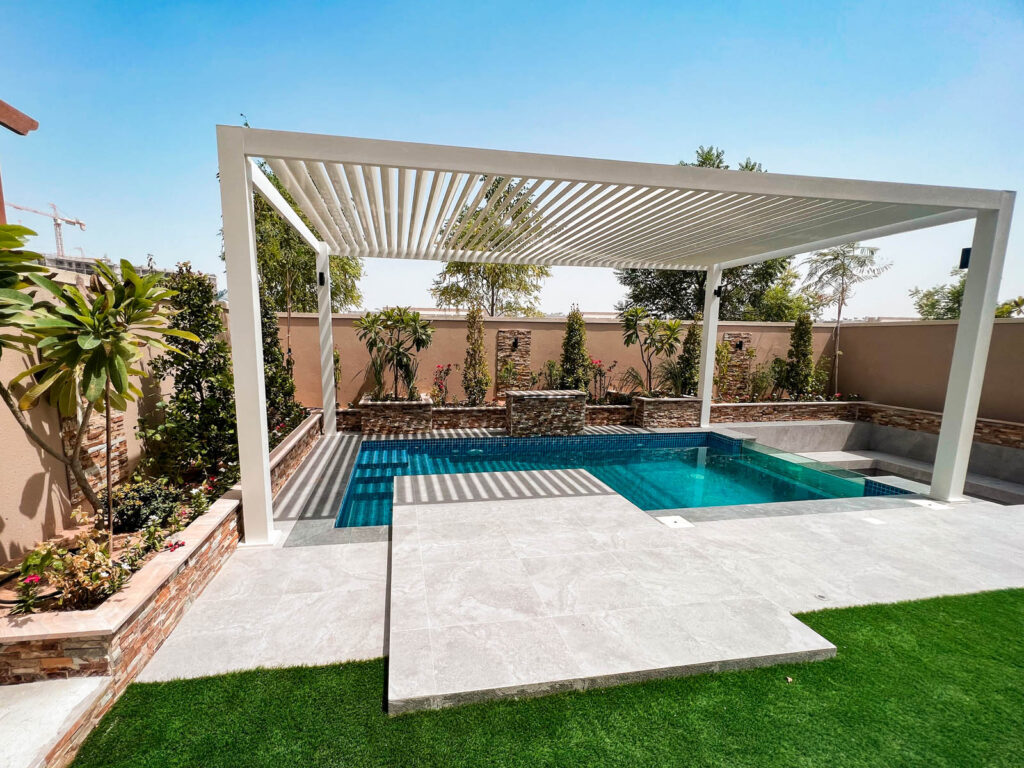
An aluminium pergola positioned over the pool deck, rather than directly over the water, is the most common permanent shade solution for UAE villas. It shades loungers, dining furniture and walkway areas around the pool while leaving the water itself open, which many owners prefer for the visual openness of the pool. Our pergola solutions are built from powder-coated aluminium specifically to withstand pool-side humidity and chlorine exposure without the corrosion issues that affect untreated metal or timber structures near water.
Motorised Louvre Roofs for Pool Areas
For pool owners who want full control over sun exposure throughout the day, a motorised louvre roof is the most flexible option available. The aluminium blades can be angled to block direct overhead sun during peak afternoon hours while still allowing filtered light and airflow, then opened fully in the evening for uninterrupted sky views. Because the blades close completely and drain rainwater through the frame, a louvre roof also means poolside furniture and cushions stay dry and protected during the occasional winter downpour. Full specifications are available on our louvre shading page.
Tensile Shade Sails Over Pools
Tensile shade sails are a popular choice for pools with irregular shapes or larger areas where a rigid roof structure would be costly or visually heavy. HDPE sail fabric blocks 90 to 95 percent of UV radiation while still allowing air to pass through, which helps prevent the stagnant, overheated air that can build up under solid roofing. Sails can be angled and layered to cover awkward pool geometries in a way that pergolas cannot easily match. See our tensile and shade sail options for pool-specific configurations.
Retractable Poolside Awnings
For pools attached to a villa wall or covered terrace, a retractable awning extending out over part of the pool deck offers flexibility at a lower cost than a full pergola or louvre system. It can be extended during peak sun hours and retracted in the evening or during cooler winter months, giving homeowners seasonal control without a permanent structure change.
Choosing the Right Pool Shade for Your Property
The right choice depends on how the pool area is actually used. A family that spends most weekends lounging poolside benefits most from a louvre roof or pergola that shades furniture and seating without covering the water itself. A pool used mainly for swimming laps in the early morning and evening may need very little permanent shade at all, with a retractable awning offering enough flexibility. Pools with irregular decking or landscaping around them, such as those built into a garden with mature trees or curved paving, are often better served by tensile shade sails that can be angled around existing features rather than a rigid rectangular pergola.
Budget is naturally a factor too. Shade sails represent the most cost-effective way to cover a large pool deck area, while a full motorised louvre roof sits at the premium end of the market but delivers the most day-to-day flexibility and the longest service life when properly maintained.
Safety and Building Considerations
Any permanent structure installed near a pool needs to account for the specific conditions of a poolside environment. Foundations and post fixings should be positioned clear of the pool coping and any underground pool plant or piping, and all metal components should carry marine-grade or equivalent corrosion protection given the constant exposure to chlorinated water and humidity. If the property falls within a community with an owners’ association or developer guidelines, such as many villa communities in Dubai and Abu Dhabi, it is worth confirming any approval requirements before installation begins.
A reputable installer will always conduct a site visit to assess drainage, structural fixing points and wind exposure around the pool before finalising a design, rather than quoting from photos or a floor plan alone.
Maintenance Tips for Poolside Shade Structures
Poolside shade structures need slightly more attention than shade installed elsewhere on a property, purely because of chlorine and humidity exposure. Aluminium frames should be rinsed with fresh water regularly to remove chlorine residue and pool splash, particularly on components close to the water’s edge. Motorised louvre mechanisms benefit from an annual inspection to check that hinges and seals have not been affected by humidity. Fabric sails and awnings should be checked periodically for any chlorine-related fading or fabric degradation near the pool edge, since this area typically experiences more direct water contact than shade positioned further from the pool.
Conclusion
A well-shaded pool area turns an underused summer feature into a space your family and guests can genuinely enjoy for most of the year, not just at sunrise and sunset. Whether that means a full aluminium pergola, a motorised louvre roof, tensile shade sails, or a simple retractable awning depends on your pool’s layout, how it is used, and your budget. Our team offers a free site visit to assess your pool area and recommend the right shade solution. Get in touch through our services page or contact us directly to arrange a consultation.
Frequently Asked Questions About Sun Shade in the UAE
How long does a good aluminium shade structure last in the UAE?
A correctly specified, powder-coated aluminium pergola or louvre roof will typically last 20 years or more with only light annual maintenance. The main factors that shorten lifespan are undersized aluminium wall thickness, poor quality powder coating that chips and allows corrosion to start, and structural fixings that were not engineered for UAE wind loads.
Do I need approval to install shade structures in the UAE?
For villas on private plots, approval requirements vary by emirate and by community. Many developer-managed communities in Dubai and Abu Dhabi require design approval before installation, while standalone plots outside these communities often have more flexibility. Apartment balconies almost always require building management approval. A reputable installer will advise on this as part of the initial site visit rather than leaving it for the homeowner to research alone.
What is the difference between a pergola and a louvre roof?
A standard pergola has a fixed roof, whether solid, polycarbonate or open-frame, that does not move once installed. A louvre roof is a pergola frame fitted with motorised, rotating aluminium blades that can open, close or angle on demand, giving year-round control over sun and rain exposure that a fixed pergola roof cannot offer. Louvre roofs cost more but offer significantly more flexibility.