A quality shade structure installed in the UAE represents a significant investment in the comfort and usability of your outdoor space. Like any outdoor infrastructure, it performs best and lasts longest when it receives appropriate care and maintenance through its service life. The UAE climate is one of the most demanding in the world for outdoor materials: intense UV radiation, extreme summer heat, occasional strong winds, salt air in coastal locations, and dusty conditions year-round all place sustained stress on the materials and components that make up a shade structure. Understanding how to care for your shade structure properly protects that investment and ensures it continues to perform and look its best for many years.
Maintenance requirements vary between structure types. A motorised louvre pergola has different service needs to a tensile shade sail or a polycarbonate-roof pergola. This guide covers maintenance best practices for all the main shade structure types installed across the UAE, including cleaning, inspection, tensioning, motor servicing, and when to call a professional for repairs or replacement. Our outdoor shade services page covers the full range of structures we install and support across the UAE.
Cleaning Your Shade Structure
Regular cleaning is the single most effective maintenance action for any shade structure in the UAE. Dust accumulation is a constant in the Gulf environment, and a layer of fine dust on fabric, polycarbonate, or aluminium surfaces gradually degrades the appearance and, in the case of fabric, can accelerate UV degradation by trapping moisture and promoting mildew growth on the fabric surface.
HDPE shade fabric should be cleaned two to four times per year using clean water and a soft brush or sponge. Avoid high-pressure washing directly on the fabric as the force can distort the weave and stress the edge finishing and corner reinforcements. A mild detergent solution is acceptable for stubborn organic staining such as bird deposits or algae, but rinse thoroughly with clean water afterwards to avoid residue build-up in the weave. Do not use bleach or solvent-based cleaners as these will degrade the UV stabilisers in the fabric coating.
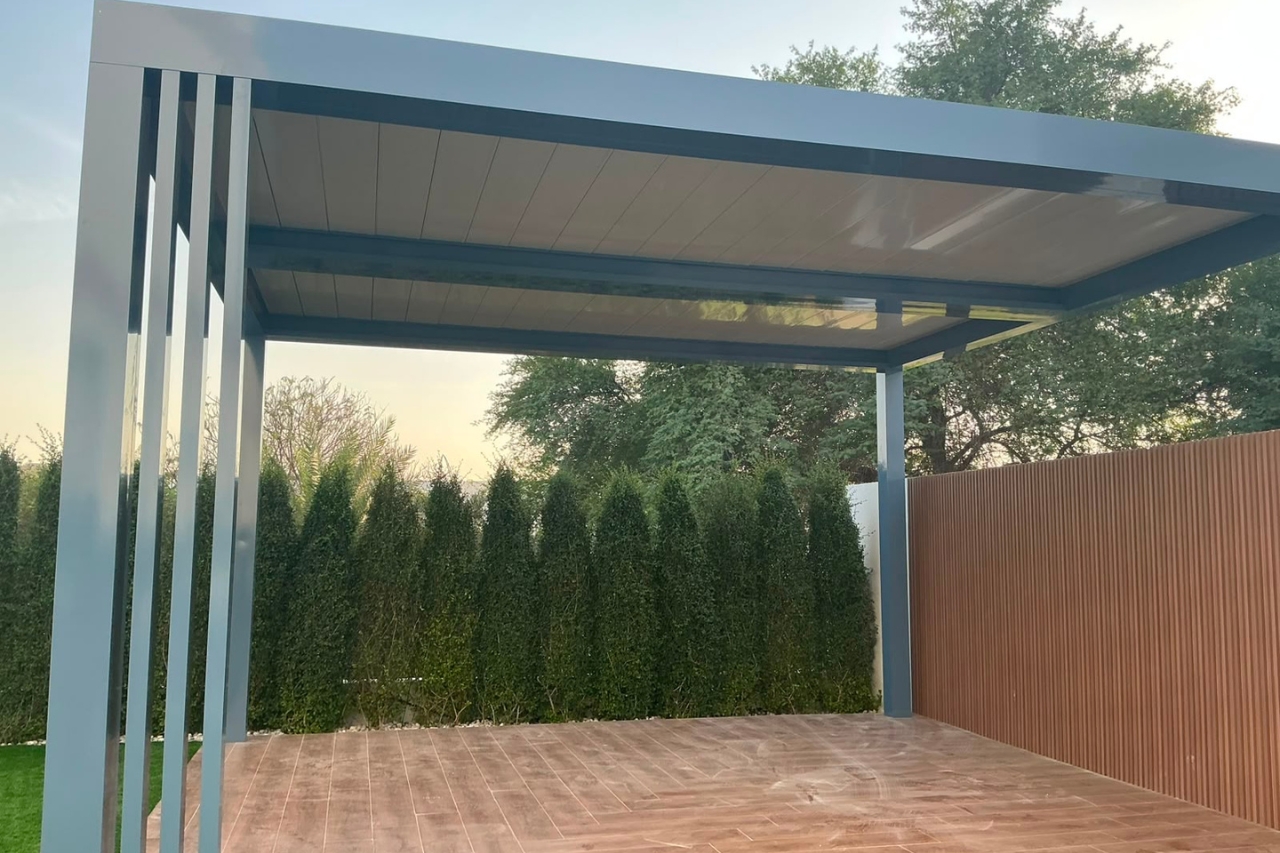
Aluminium pergola frames should be washed down periodically with clean water and a soft cloth to remove dust, bird deposits, and salt deposits in coastal areas. The powder coat finish is durable but benefits from an annual wipe with a mild automotive polish to maintain the surface and protect it from salt air oxidation, particularly on properties within two to three kilometres of the sea. Check for any chips or scratches in the powder coat and touch up with matching paint to prevent corrosion starting at the exposed point.
Polycarbonate roof panels accumulate dust, bird deposits, and organic staining that reduce light transmission over time. Clean with lukewarm water and a soft cloth or sponge. Never use abrasive cleaners or abrasive pads on polycarbonate as these scratch the surface permanently. A proprietary polycarbonate cleaner and UV protectant applied annually helps maintain optical clarity and surface condition. Our pergola installation UAE page covers the range of roof covering options including polycarbonate panels and their maintenance requirements.
Inspecting Tensioning and Hardware
Tensile shade sails and tensile fabric structures rely on maintained tension to perform correctly. Over time, particularly in the first year after installation, fabrics can relax slightly as they settle into their installed position. An annual inspection of tensioning hardware including turnbuckles, shackles, and cable terminations is recommended to check that the correct tension is maintained and that all hardware is tight and free from corrosion.
A shade sail that has become noticeably slack is more susceptible to wind damage because slack fabric flaps and generates dynamic loads that tight fabric does not. If your shade sail appears to have lost tension, contact your installer to re-tension the fabric before the next wind event rather than leaving it in a slack condition. Our outdoor tensile sun shade UAE page covers tensile shade sail specifications and we provide re-tensioning as part of our aftercare service.
All fixing points including post base plates, wall anchors, and cable anchor plates should be inspected annually for signs of movement, corrosion, or loosening. Foundation movement is rare but can occur in sandy or unstable soils, and catching any movement early prevents more serious structural problems developing. Any hardware showing signs of surface corrosion should be treated or replaced promptly, particularly in marine environments.
Motorised Louvre Pergola Servicing
Motorised louvre systems have mechanical and electrical components that benefit from periodic professional servicing. The electric motors that drive the louvre blades are generally robust and reliable, but an annual service that checks motor operation, cleans the motor housing, tests the control system including remote, wall switch, and any connected app, and verifies that rain and wind sensors are functioning correctly will identify any developing issues before they cause a system failure.
The louvre blades themselves should be inspected for alignment: blades that are not tracking parallel will not seal correctly in the closed position, allowing water to penetrate. Blade pivot bearings can wear over time and may need lubrication or replacement after several years of operation. Drainage channels in the blades and beams should be checked and cleared of any debris that could cause water to back up rather than drain freely. Our premium pergola solutions UAE page covers motorised louvre systems and we provide scheduled maintenance contracts for commercial and residential louvre installations.
Seasonal Maintenance in the UAE Context
The UAE has two distinct outdoor seasons that call for different maintenance attention. Before the summer season from May onwards, it is worth carrying out a full inspection of the shade structure to ensure it is in good condition before the period of heaviest use and most intense UV exposure. Check fabric condition, tension hardware, motor operation, and drainage. Address any minor issues before summer rather than during it.
Before the winter season from October onwards, the UAE experiences its occasional rainfall, which tends to arrive quickly and in concentrated bursts. Ensure drainage channels in louvre pergolas are clear, check that fabric panels are properly tensioned to shed water rather than pond it, and confirm that all hardware is in good condition before the rains arrive. For pool shade structures, check that the shade fabric or roof panels over the pool area are secure and will not be displaced by an unexpected storm. Our premium swimming pool shades UAE page covers pool shade specifications that are designed for UAE weather patterns.
Wind Event Precautions
The UAE experiences occasional strong wind events, particularly during the shamal season in summer and during winter frontal systems. A well-engineered shade structure installed to the correct specification for the local wind zone will handle these events without intervention. However, for shade sails that were specified for a lower wind load than a severe wind event might generate, de-tensioning and temporarily removing the fabric during an extreme event is a sensible precaution.
For motorised louvre pergolas, closing the louvres before a predicted wind event reduces the wind load on the roof significantly compared to leaving them open. Many premium systems include a wind sensor that will automatically adjust the louvre angle in strong wind. For car parking shade canopies, the structural framework is engineered to handle the specified wind loads and no intervention is normally required. Our car parking shades UAE page covers the engineering standards applied to parking canopy structures.
When to Replace Shade Fabric
Even the best quality shade fabric has a finite service life in the UAE climate. HDPE knitted shade fabric typically lasts eight to twelve years depending on the colour, the UV exposure, and the care taken in cleaning and maintenance. Signs that fabric is approaching end of life include visible fading and colour change, loss of structural integrity in the weave, fraying at edges or stitched seams, and a noticeable reduction in shade density as the UV-stabilising coating in the fibre breaks down.
When fabric replacement is required, the structural posts, hardware, and tensioning components can usually be reused, making fabric replacement significantly more cost-effective than a full reinstallation. Sun Shade UAE carries out fabric replacement on existing shade structures regardless of whether we installed the original. If you are unsure whether your existing shade fabric is approaching the end of its service life, contact us for an assessment and our team will advise on whether cleaning and re-tensioning will restore performance or whether replacement is the more cost-effective route.