
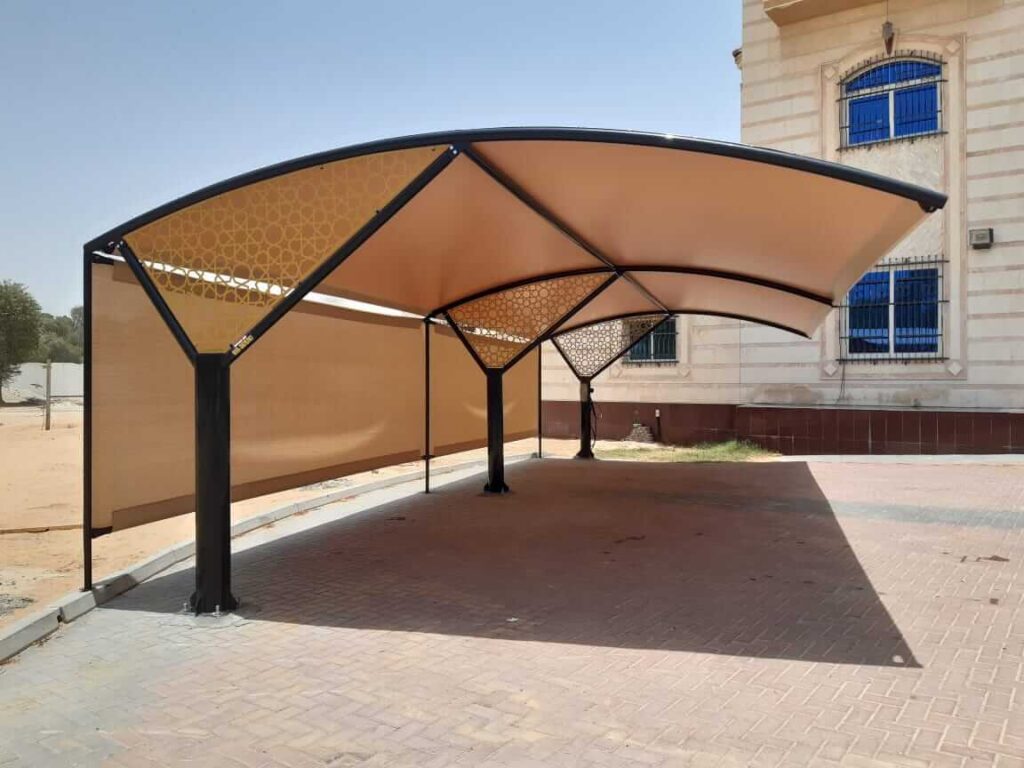
Some companies advertising as car parking shade manufacturers Dubai wide actually import complete or partial structures from overseas rather than fabricating locally. Understanding this distinction helps explain differences in price, lead time, and long-term support you might encounter when comparing quotes.
Why Imported Structures Exist in the Market
Importing pre-fabricated frames or fabric panels can reduce upfront cost for a supplier, particularly for high-volume standard sizes produced overseas at scale. For a buyer, this can translate to a slightly lower price on very standard, catalogue-size structures, provided the imported material meets UAE wind load and climate standards.
The Hidden Costs of Importing
Import lead times of several weeks to months are common, since structures ship by sea freight rather than being fabricated on demand locally. If a part is damaged in transit or does not fit the actual site conditions once it arrives, resolving the issue means waiting on another shipment rather than a local workshop fix within days.
Climate Compatibility Concerns
Structures engineered for a different climate, particularly one with lower UV intensity or different wind patterns, may not perform as expected in Dubai’s specific conditions. Galvanizing standards, fabric UV stabiliser packages, and wind load ratings all vary by region, and an imported structure not specifically engineered for the Gulf may underperform even if it looked identical to a locally made equivalent on paper.
What Local In-House Manufacturing Offers
A local manufacturer engineers each structure against UAE-specific wind load standards and climate conditions from the outset, rather than adapting a generic overseas design. Fabrication, quality checks, and any adjustments needed for a specific site all happen within days rather than weeks, and warranty claims are resolved directly with the same team that built the structure.
Comparing Warranty Support
A locally manufactured structure’s warranty is backed by a company with physical fabrication capability nearby, meaning a replacement part can often be produced and delivered within days. An imported structure’s warranty may require shipping a replacement part from overseas, turning a straightforward repair into a weeks-long wait regardless of how clearly the warranty terms were written.
Questions to Ask About Origin
- Is the steel frame fabricated locally or imported as a complete unit?
- If imported, where specifically, and has it been certified for UAE wind load standards?
- What is the realistic lead time for a replacement part if something needs fixing?
- Can I see a completed local project I could visit in person?
Frequently Asked Questions
Are imported shades always lower quality?
Not necessarily, but climate compatibility and support speed are genuine trade-offs worth weighing against any price difference, particularly for structures that will be in place for over a decade.
How can I tell if a quote is for an imported or local structure?
Ask directly where fabrication happens. A supplier confident in local manufacturing will describe their process specifically, while vague answers often indicate an imported or resold product.
Does local manufacturing always cost more?
Not always, particularly once realistic delivery timelines and warranty support speed are factored into the comparison rather than upfront price alone.
Understanding where and how your structure is actually built helps set realistic expectations for both quality and support. See our complete guide to car parking shade manufacturers Dubai businesses can trust for direct, locally engineered supply.
How Local Manufacturers Handle Custom Requests
A genuine local manufacturer can typically accommodate custom span, height, or colour requests within their normal production timeline, since the fabrication process is already happening on-site rather than being dictated by an overseas production run designed around standard catalogue sizes. This flexibility is one of the more practical, if less discussed, benefits of choosing local manufacturing over an imported alternative.
Verifying Local Manufacturing Claims
Beyond simply asking where a structure is made, request to see the facility, even via a video call, or ask for the specific address of the fabrication workshop. A genuine manufacturer will provide this without hesitation, while a company relaying orders elsewhere may offer vague or shifting answers when pressed for specifics.
The Growing Preference for Local Supply Chains
Beyond the practical quality and support benefits, many UAE developers and property owners increasingly prefer supporting local manufacturing for broader supply chain resilience reasons, reducing dependence on international shipping schedules that can be disrupted by factors entirely outside any single project’s control.
Frequently Asked Questions
Is locally manufactured always more expensive than imported?
Not necessarily. Once realistic delivery timelines, customs handling, and warranty support speed are factored in, local manufacturing often compares favourably even before considering climate-specific engineering advantages.
Can I request a factory tour before ordering?
Most established local manufacturers welcome this, either in person or via video call, since it is one of the clearest ways to demonstrate genuine fabrication capability to a prospective client.
Does local manufacturing mean faster warranty repairs?
Generally yes, since a local manufacturer can produce replacement parts using the same equipment and process used for the original structure, without waiting on international shipping.
Understanding the practical difference between local manufacturing and imported supply helps set realistic expectations for quality, support, and total cost of ownership over the life of your structure.
Making an Informed Supplier Choice
Ultimately, the effort spent verifying whether a supplier genuinely manufactures locally pays off most clearly the first time something needs fixing quickly, or when a large or urgent order needs to be fulfilled on a tight timeline. Taking this seriously at the outset, rather than assuming all suppliers are functionally equivalent, sets up a far smoother experience for the life of the structure.
What This Means for Your Next Purchase
Armed with the right questions, comparing quotes for your next car parking shade becomes a far more informed process than simply picking the lowest number on a page. A supplier willing to answer every question in this guide clearly and specifically is demonstrating exactly the kind of transparency that predicts a smoother project and better long-term support, regardless of whether their price ends up being the cheapest option on the table.
The Bigger Picture for UAE’s Shade Industry
As more buyers ask these kinds of questions, the market naturally rewards genuine manufacturers over pure resellers, encouraging more companies to invest in local fabrication capability rather than relying entirely on imported supply chains. This shift benefits the entire market over time, not just individual buyers, by raising the baseline quality and support standard that every company in the space needs to meet to stay competitive.
A Final Word on Due Diligence
None of the checks outlined in this guide take more than a few minutes to ask about, yet together they reveal more about a company’s actual manufacturing capability than any brochure or website claim ever could. Treating this due diligence as a normal, expected part of the buying process, rather than an awkward interrogation, keeps the conversation productive and helps both sides arrive at a project that genuinely fits the client’s needs.
At the end of the day, the extra ten minutes it takes to ask these questions is a small price for the confidence of knowing exactly who is building the structure that will protect your vehicle for the next fifteen years or more.
One More Consideration: Aftercare Beyond Warranty
Even after a warranty period ends, a manufacturer with ongoing local operations remains available for paid repairs, part replacement, or advice, whereas a reseller whose original supplier relationship has since ended may simply be unable to help at all. This long-term availability, rarely discussed during the initial sales conversation, becomes genuinely important for anyone planning to keep a property, and its shade structures, for many years.