The fabric or covering material is the most critical component of any shade structure. It is the element that determines how much UV radiation is blocked, how much heat builds up beneath the structure, whether the space stays dry in rain, how long the installation will last, and what the structure looks like from both above and below. In the UAE, where shade structures must perform in one of the most extreme outdoor climates on earth, choosing the right fabric is not a minor specification detail but a fundamental decision that shapes the entire value of the installation. This guide explains the main shade fabric types available in the UAE, their performance characteristics, the applications each suits best, and the questions to ask when evaluating a shade fabric specification.
Fabric selection applies across all shade structure types: shade sails, tensile pergolas, retractable awnings, tensile canopies, and pool shade structures all use fabric whose specification determines their performance in the field. Our outdoor shade services page covers every shade structure type we install, and our team advises on fabric selection for every project as part of the design process.
The UAE Climate Demands on Shade Fabric
Before comparing fabric types, it is worth understanding what the UAE climate specifically demands of a shade fabric. UV radiation in the UAE is among the highest in the world for a populated region, with UV index values regularly reaching extreme levels during summer months. A shade fabric that lacks adequate UV stabilisation will degrade rapidly: colour fades within months, fibres weaken, and the shade factor drops well below the rated value long before the expected end of service life.
Heat is the second major challenge. Summer air temperatures regularly exceed 45 degrees Celsius, and surface temperatures on unshaded materials can reach 70 to 80 degrees. A shade fabric that absorbs heat and re-radiates it downward makes the space beneath it hotter rather than cooler. Fabrics that reflect solar radiation rather than absorbing it, and that allow air to move through or around them, perform far better in the UAE thermal context than solid dark materials.
Salt air in coastal locations adds another stress factor. Fabrics with metal reinforcement threads or PVC coatings that are not formulated for marine environments can corrode or delaminate when exposed to salt-laden air over time. UAE coastal projects require materials specified for coastal exposure.
HDPE Knitted Shade Fabric
High-Density Polyethylene knitted shade fabric is the most widely used shade fabric in the UAE and across the Gulf region. It is produced by knitting HDPE monofilament threads into an open weave structure and then treating the threads with UV stabilisers that protect the polymer from solar degradation. The open weave allows air to circulate freely through the fabric, which is its key thermal advantage: shaded spaces beneath HDPE fabric stay significantly cooler than those under solid materials because hot air can escape upward through the weave rather than being trapped.
HDPE shade fabric is rated by its shade factor, which is the percentage of solar radiation it blocks. Standard shade factors range from 70 percent for lighter open weaves to 97 percent for denser weaves. For the UAE climate, a shade factor of 90 percent or above is recommended for any space where people will spend extended time. The shade factor is directly related to the density of the weave: higher shade factors mean less air movement through the fabric, so there is a balance to be found between maximum shade and maximum ventilation for each application.
Quality HDPE shade fabric carries a manufacturer warranty of ten years against UV degradation. In practice, well-maintained HDPE fabric in the UAE lasts eight to twelve years before replacement is needed. HDPE is the standard fabric specification for residential shade sails, tensile shade structures, car park canopies, and school playground shade across the UAE. Our outdoor tensile sun shade UAE page covers tensile shade sail solutions that use quality HDPE fabric throughout.
PVC-Coated Polyester Fabric
PVC-coated polyester is the fabric of choice for applications that require complete waterproofing combined with high UV blocking. The base material is a polyester woven fabric, which provides the structural strength and dimensional stability, coated on both faces with a PVC compound that seals the weave completely against water penetration. The result is a fabric that is strong, fully weatherproof, and available in a wide range of colours and translucencies including translucent versions that allow diffused daylight to pass through the roof while blocking rain and UV.
The trade-off with PVC polyester is that it does not breathe. No air moves through the sealed surface, which means heat management in the design of the structure is more important. Large PVC tensile canopies use high mast points that lift the fabric well above the occupied zone to allow natural convection to move air through the covered space from the sides. For smaller covered areas, mechanical ventilation or ceiling fans may be incorporated to maintain air movement. Our louvre shading and tents UAE page covers large fabric tent and canopy structures that use PVC polyester fabric for full weatherproofing.
PVC polyester fabric is the standard specification for large commercial tensile canopies, event structures, permanent hospitality pavilions, and any application where rain protection is required alongside sun shading. It is also the fabric used in quality retractable awning systems. Our pergola installation UAE page covers fabric-roofed pergola options that use both HDPE and PVC polyester depending on the weatherproofing requirement.
Polycarbonate and Aluminium Panel Roof Coverings
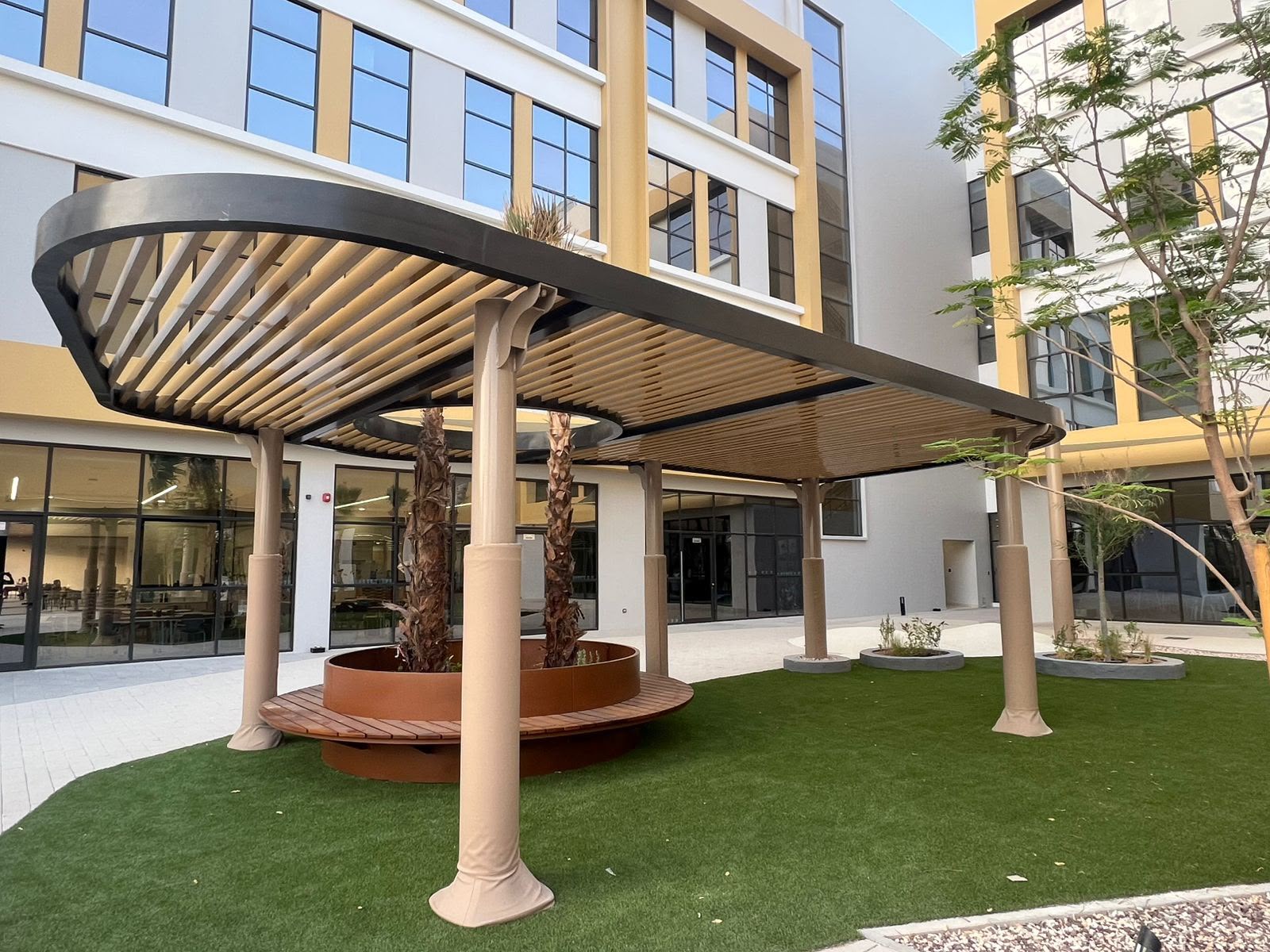
While not technically fabrics, polycarbonate panels and insulated aluminium panels are roof covering options for pergola structures and should be considered alongside fabric options when choosing a shade solution. Polycarbonate is a rigid plastic panel available in clear, opal, and tinted versions. It transmits light while blocking UV and provides complete waterproofing. Multi-wall polycarbonate panels offer some thermal insulation but still transmit solar energy into the space below, which can cause heat build-up in summer.
Insulated aluminium sandwich panels have an aluminium outer face, a foam insulation core, and a finished inner face. They are completely opaque, waterproof, and provide the best thermal insulation of any rigid roof covering for a pergola structure. They are the specification of choice where maximum thermal comfort in the covered space is the priority, such as for outdoor kitchens, covered gym areas, or commercial outdoor workspaces where occupants are present through the hottest part of the day. Our premium pergola solutions UAE page covers the full range of roof covering options for aluminium pergola structures.
Colour Selection for UAE Shade Fabric
Colour affects both the thermal performance and the longevity of shade fabric in the UAE climate. Light colours reflect more solar radiation and keep the fabric cooler, which reduces the thermal stress on the UV stabilisers and extends service life. Dark colours absorb more heat, which accelerates UV stabiliser breakdown and shortens fabric life. For this reason, light colours such as cream, sand, beige, light grey, and white are generally preferred for UAE shade fabric on thermal and longevity grounds as well as aesthetics.
The colour also affects the light quality beneath the shade structure. A cream or sand fabric creates a warm, golden light quality that suits residential entertaining spaces and hospitality environments. A grey or charcoal fabric creates a cooler, more neutral light quality. White fabric creates the brightest, most neutral light. Choosing a fabric colour that complements the colours of the property and the intended atmosphere of the outdoor space is as important as the technical fabric specification.
Get Expert Fabric Advice for Your Shade Project
Sun Shade UAE specifies and supplies quality shade fabrics for every type of shade structure we install. Our team advises on the right fabric type, shade factor, colour, and specification for each project based on the specific requirements of the space, the expected use pattern, and the budget. Whether you are shading a villa pool deck, a commercial car park, a restaurant terrace, or a rooftop entertainment area, we will recommend the fabric that gives you the best combination of performance, longevity, and appearance for your UAE outdoor environment. To discuss your project and get expert fabric advice, contact us today for a free consultation.