
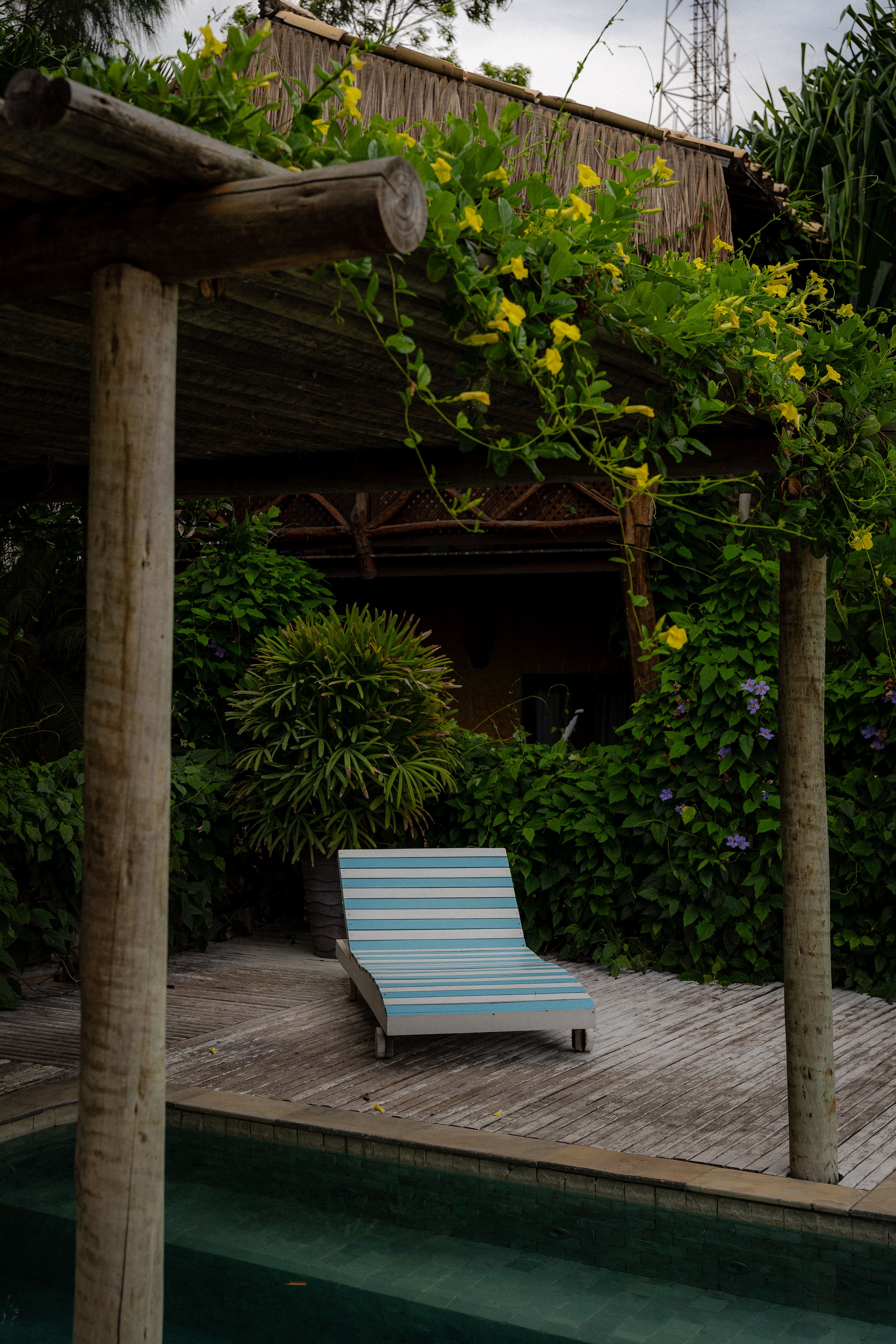
With several distinct shade types available for pool areas, choosing the right one for swimming pool shades UAE homeowners are installing depends heavily on pool shape, usage patterns, and how much flexibility you want from the structure.
Tensile Sail Shades
Fabric sail shades work particularly well for irregular or curved pool shapes, since multiple sails can be angled and layered to follow the pool’s outline more naturally than a rigid frame would allow. They tend to be the most cost-effective option for covering a specific section of a pool rather than the entire area.
Louvered Pergolas
A motorised louvered pergola positioned beside a rectangular pool deck offers the most flexibility, allowing full sun, filtered light, or complete shade depending on the time of day. This option suits homeowners who want the pool area usable across a wider range of conditions rather than a fixed shade pattern.
Retractable Fabric Canopies
Retractable canopies mounted on a track can be extended or retracted as needed, offering a middle ground between the low cost of a fixed sail and the full flexibility of a motorised louvered system. They work well for pool decks where full sun is sometimes wanted for sunbathing and full shade at other times for comfortable seating.
Comparing Cost and Flexibility
- Sail shades: lowest cost, no flexibility, best for specific fixed coverage needs
- Retractable canopies: moderate cost, manual or motorised flexibility, good middle-ground option
- Louvered pergolas: highest cost, full flexibility, best for daily year-round use
Considering Pool Chemistry and Material Durability
Any structure near a pool needs materials resistant to chlorine and salt exposure, both of which accelerate corrosion on standard fittings faster than typical atmospheric exposure. Marine-grade stainless steel fixings and properly sealed aluminium are worth specifying for any shade structure within a few metres of pool water, regardless of which shade type you choose.
Positioning for Your Specific Pool
Before committing to a design, track how sunlight moves across your pool at different times of day, ideally across more than one season if usage happens year-round. This simple observation often reveals that a single shade placement does not cover the whole pool adequately, which is why some larger or irregularly shaped pools benefit from a combination of two shade types rather than relying on one alone.
Frequently Asked Questions
Which shade type is best for a small pool?
A single sail shade or a compact pergola section usually suits smaller pools well, both for cost efficiency and for keeping the space visually proportional.
Can different shade types be combined around one pool?
Yes, combining a sail shade over one section with a pergola over a seating area is a common and effective approach for larger or irregularly shaped pools.
How does pool shade affect water temperature?
Shading measurably reduces water temperature rise over the course of a day, making the pool more comfortable to use during peak afternoon heat.
For material options, coverage patterns, and pricing guidance specific to pool areas, see our complete guide to swimming pool shades UAE homeowners are installing this season.
Seasonal Adjustments for Pool Shade Use
Shade needs shift meaningfully between UAE summer and winter, with full afternoon coverage valued most during peak heat while winter months may call for more open exposure to retain water warmth. A retractable canopy or motorised louvered pergola accommodates this seasonal shift far better than a fixed sail shade, which delivers the same coverage pattern year-round regardless of actual need.
Working With a Landscape Designer for Integrated Results
For a pool area shade project intended to look like part of an overall outdoor design rather than a standalone addition, involving a landscape designer alongside the shade supplier from the early planning stage produces a more cohesive result. This coordination is particularly valuable when shade structures interact closely with planting, lighting, and seating areas surrounding the pool.
Frequently Asked Questions
Do pool shades need special anchoring near water?
Yes, foundations near pool decking need to account for both the structural load and the specific ground conditions typical of pool surrounds, which a proper site survey will assess before installation.
How often should pool shade fabric be inspected given chlorine exposure?
An annual inspection is reasonable for most residential pool shades, checking specifically for any fabric or fitting degradation that might be accelerated by chlorine exposure compared to a standard car parking shade.
Is it better to install pool shade before or after pool construction?
Coordinating both projects together, ideally at the design stage, produces the best integrated result and avoids potential conflicts between shade foundations and pool equipment or plumbing installed later.
Thoughtful pool shade planning transforms a functional necessity into a genuine enhancement of the overall outdoor living space.
Bringing the Whole Pool Area Together
The best pool shade solutions are chosen as part of the overall pool area design, not bolted on as an afterthought once everything else is finished, which is why involving your shade supplier early in the planning process consistently produces the most satisfying long-term result.
Learning From Neighbouring Properties
Observing how similar pool shade solutions have performed on neighbouring or comparable properties over several years provides a more realistic picture of long-term performance than any single installation photo can offer. If a neighbour has a shade solution you admire, asking about their experience with maintenance and durability is a practical, low-cost way to inform your own decision.
Final Practical Advice
Whichever shade type you eventually choose for your pool area, prioritising marine-grade fittings, proper foundation work, and a supplier experienced specifically with pool-adjacent installations will serve you better over time than choosing based on initial appearance alone.
A Final Word on Pool Shade Planning
A pool area shaded thoughtfully, with real attention to sun patterns, pool shape, and surrounding design, consistently delivers more genuine daily enjoyment than one shaded as an afterthought once every other decision has already been made.
Enjoying Your Shaded Pool for Years to Come
A pool shade solution chosen with genuine care for sun patterns, pool shape, and daily usage habits pays back that initial thoughtfulness every single time the pool area gets used comfortably during hours it previously would have been too hot to enjoy.
Taking the time to get this decision right transforms a pool from a feature used only in the early morning into one enjoyed throughout most of the day, year-round.
One More Consideration: Combining Shade With Pool Heating Efficiency
For pools with heating systems, strategic shade placement can also reduce heat loss overnight in cooler months, offering a secondary efficiency benefit beyond daytime comfort that is worth mentioning to your pool equipment provider when planning shade placement.
A Closing Thought on Comfort
A pool that stays comfortable to use across more hours of the day and more months of the year delivers a return on the shade investment that goes well beyond the initial installation cost, measured simply in how much more the space actually gets used.
A well-planned shade turns a good pool into a genuinely great one, used and enjoyed far more consistently across the entire year.
Whichever option you settle on, revisiting the plan once a year keeps the shade performing exactly as intended as your pool area and its surroundings continue to evolve.
The extra planning is minor compared to the daily benefit it delivers.
A well-shaded pool area becomes one of the most appreciated spaces on the entire property.