
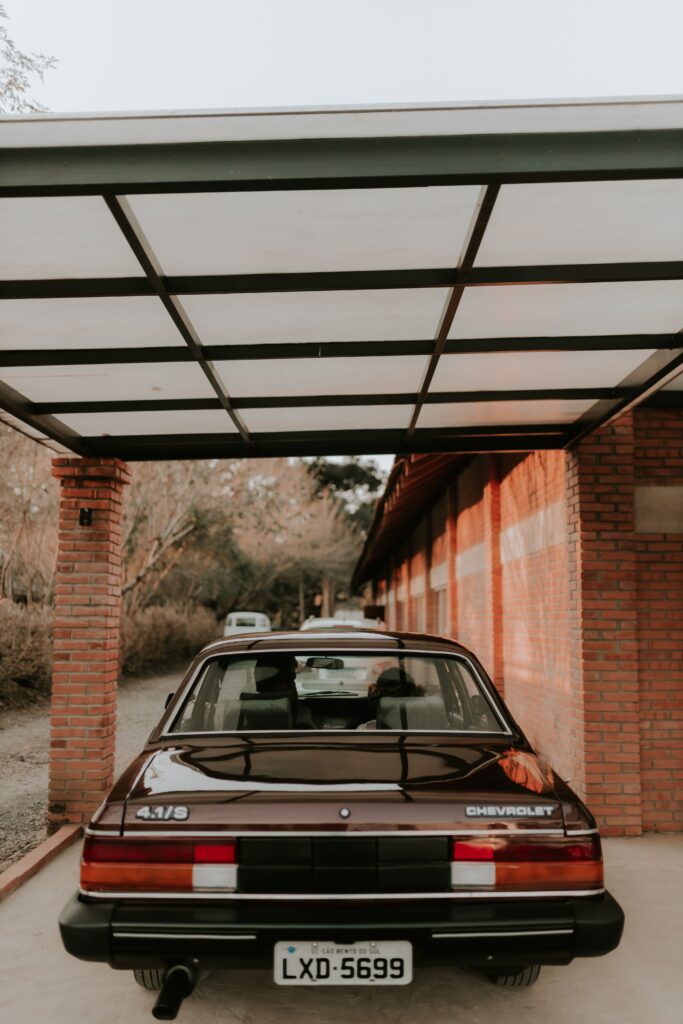
Every buyer asks the same question sooner or later: how many years will it last? For PVC car parking shades Dubai owners choose for full weather protection, the honest answer is a range rather than a single number. Ten to fifteen years is common, but the fabric on one driveway can fail in seven while its neighbour looks fresh at fourteen. The difference comes down to material quality, installation, maintenance and exposure. This guide explains what ages PVC in UAE conditions, what you can control and how to recognise the early warning signs.
What PVC Fabric Is Made Of
PVC shade fabric is a woven polyester base coated on both sides with polyvinyl chloride. The polyester provides tensile strength, while the coating makes the surface waterproof and carries the colour. Additives mixed into the coating, including UV stabilisers and plasticisers, determine how well the material resists sunlight and stays flexible. Two rolls that look identical can have very different additive packages, which is why low-priced fabric often becomes brittle and chalky long before premium material does.
How UAE Sun and Heat Age the Material
Ultraviolet radiation slowly breaks down the chemical bonds in the coating, while sustained heat drives plasticisers out of the PVC and makes it stiffer. Dubai’s summers combine both effects at extreme levels, so a fabric specified for a milder climate can degrade much faster here. Dark colours absorb more heat and can age slightly faster than light tones. Dust and salt in the air add abrasion and can trap moisture against the surface. A fabric made with a robust UV package and applied with a protective top lacquer resists these pressures far better.
Installation Quality and Tension
Correct tensioning has a surprisingly large effect on lifespan. Fabric stretched too loosely flaps in wind, which fatigues the material and the seams. Fabric stretched too tightly carries constant stress at its corners and welds, which can cause cracks over time. Roof slope matters too, because water that pools on a flat section adds weight and speeds up wear. A careful installer follows the manufacturer’s tension specification and checks drainage before leaving site.
Maintenance That Extends Life
- Wash the surface twice a year with mild soap and a soft brush
- Avoid pressure washers at close range, which can damage the coating
- Clear gutters and drainage points before the winter rain season
- Inspect seams and corner fixings annually for early separation
- Repair small tears quickly before tension makes them grow
These tasks take little time, yet they routinely add several years to a fabric’s working life, because dirt left on the surface holds moisture and accelerates breakdown.
Warning Signs That Replacement Is Near
Look for chalky or faded patches, a sticky or powdery surface, small cracks along folds, seams that begin to lift, or sagging that retensioning no longer fixes. A single sign does not mean disaster, but several together suggest the coating is reaching the end of its life. Replacing the fabric on a sound steel frame is far cheaper than a new structure, so acting early is economical.
PVC Compared With HDPE and PTFE
HDPE commonly lasts eight to twelve years but is not waterproof. PVC lasts a little longer and keeps water out. PTFE costs more but can last twenty years or more and resists dirt and sunlight exceptionally well. For most villas and commercial car parks, PVC offers the best balance of cost, protection and durability, provided the grade is good.
Colour, Finish and Their Effect on Ageing
Colour influences how PVC fabric ages. Dark pigments absorb more solar energy, so the surface runs hotter and the coating can degrade slightly faster than a lighter tone made to the same specification. Light sand and beige shades reflect more heat and tend to look fresh for longer. Surface finish matters as well. A smooth, lacquered top coat sheds dust and is easier to clean, whereas a rougher finish holds dirt and invites mildew in humid periods. When you view samples, look at them outdoors in direct sunlight, because showroom lighting hides colour shifts that become obvious on a real roof.
Ask also about the pigment quality. Premium fabrics use stable pigments that resist fading, while cheaper ones can turn blotchy within a few seasons even if the structure underneath is sound.
Planning Replacement Before You Need It
Because PVC eventually reaches the end of its life, it helps to plan replacement rather than wait for a failure. Many owners schedule fabric replacement on a sound steel frame once the material shows significant wear, often between years ten and fourteen. Doing so before a major tear avoids emergency repairs during winter storms, and reuses the existing posts and foundations, which makes it far cheaper than a complete new structure. Keep the original supplier’s details and fabric specification so the new roof can be cut to match the frame exactly.
Environmental Factors Specific to Dubai
Dubai places unusual demands on fabric. Summer surface temperatures can exceed anything the material would face in a temperate climate, while humidity near the coast keeps moisture trapped against the surface overnight. Sand carried by wind acts like fine sandpaper on exposed fabric, and salt in the air attacks fixings and corners. Heavy winter rain tests seams and drainage that stay dry for months. A PVC specification written for a European garden may therefore underperform here, which is why asking for a UAE-suitable grade, with a strong UV package and good abrasion resistance, is worthwhile. Suppliers who work in the region daily know which products survive and which do not.
Questions That Reveal Fabric Quality
Ask for the fabric weight, the thickness of the coating, the UV rating, the manufacturer and the warranty terms. Request a physical sample and flex it, looking for cracking or stickiness. Check whether the supplier can show an earlier project using the same fabric after several summers. Fabric quality is hard to judge by eye, so evidence and transparency are your best guides.
Cost of Replacement Versus Cost of Neglect
Replacing PVC fabric is a planned expense, and costs far less than most owners expect when the frame is sound. Neglect, by contrast, is expensive. A small tear left unrepaired can run along a seam in the next storm, forcing an emergency replacement at short notice. Water ponding on a sagging section adds weight that stresses the frame, and dirt left in place keeps the surface damp and encourages mildew. By inspecting twice a year and acting on small defects, you spend little and often delay replacement by several seasons. Think of maintenance as the cheapest way to extend the useful life of the whole structure.
Keep a simple record of when your fabric was installed, the supplier and the grade, along with photographs taken each year. Comparing images over time makes gradual change easy to spot, and gives you evidence if you ever need to make a warranty claim.
Frequently Asked Questions
Does colour affect how long PVC lasts?
Slightly. Lighter colours run cooler and tend to age more gently, though the quality of the UV package matters more than shade.
Is the warranty the same as the lifespan?
No. A warranty covers defects for a stated period, while real lifespan depends on exposure and care.
Can old PVC be recoated?
Sometimes, but replacement is usually more reliable once the surface has cracked.
A good fabric, a careful installation and regular cleaning together decide how many years you get. For specifications, colours and pricing, see our complete guide to PVC car parking shades Dubai homeowners and businesses are choosing.